Donating Blood Platelets: Figuring it Out
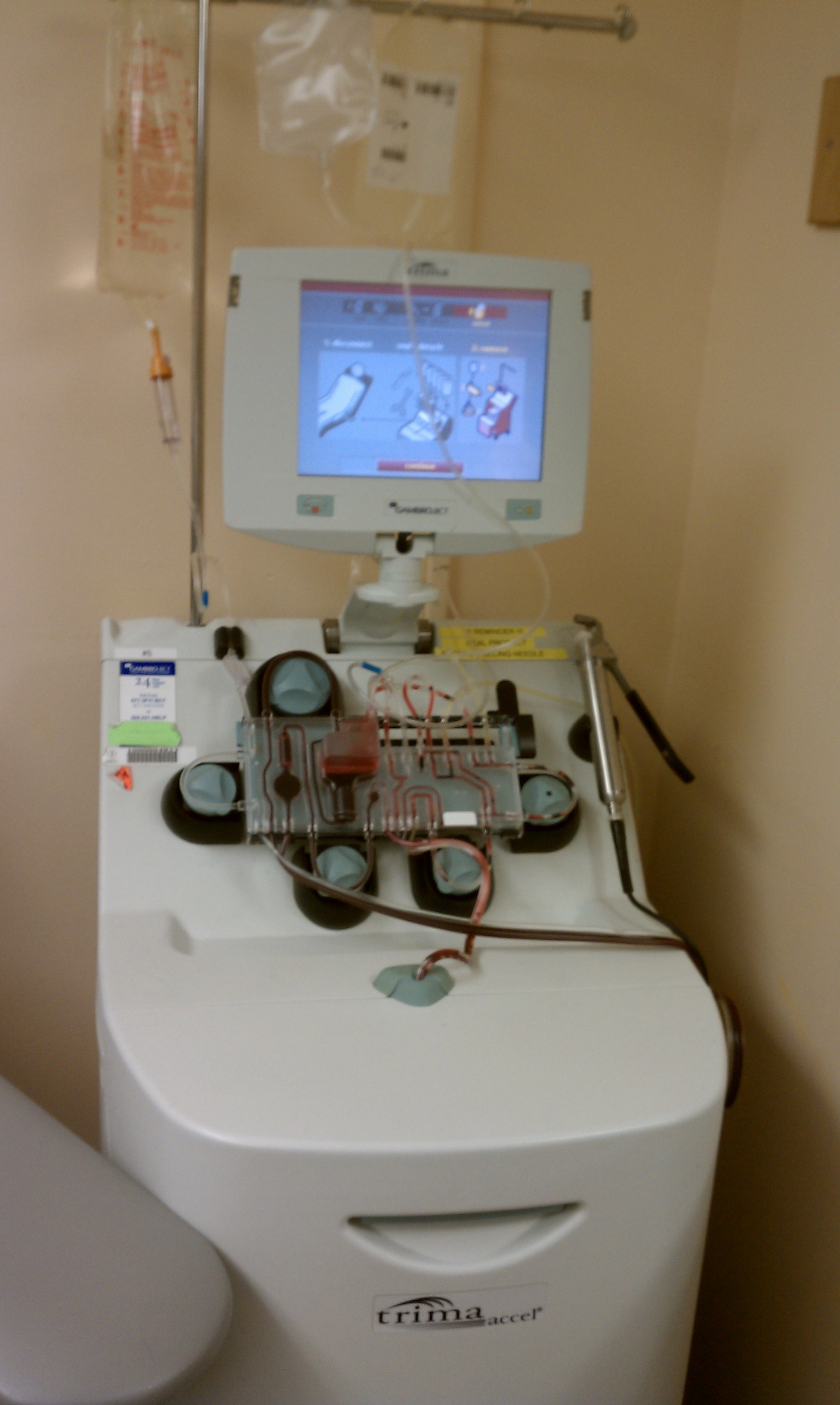
the apheresis machine at Memorial Sloan Kettering
Towards the end of last year, my friend Eric LeVine mentioned that he couldn’t meetup on a particular day because he was donating blood platelets. I was intrigued because I imagined that platelets are in short supply (they are) and it seemed to be a way to have a direct impact on someone in need without writing a check.
It turns out that donating blood platelets is easy, fast, and with few side effects. Blood platelets are also in high demand because they have a very short lifespan (5-7 days v. 40-50 days for whole blood) and there aren’t a lot of sites where one can donate platelets. The equipment is expensive and hospitals are generally not great at marketing, nor do they have the budget.
An overview of the blood platelet donation process in two sentences:
When you donate blood platelets, you are hooked up to a machine that draws your blood (known as a platelet apheresis machine), pipes it to a centrifuge that separates out (and keeps) your platelets and returns your red blood cells, white blood cells, and component plasma back to your body, along with some short-term anti-coagulant. The machine is outfitted with a single-use kit so there is no risk of blood contamination to the tubing or centrifuge.
What happens and how long does it take?

the post-donation juice and cookies at MSK
1. Show up at the hospital and fill out paperwork (15 mins)
2. Have your blood pressure checked and finger pricked for a hemoglobin level test (15 mins)
3. Get hooked up to a Apheresis machine (5 mins)
4. Have the machine draw some initial blood which is evaluated for your platelet count (5-10 mins) [min to donate is 150k]
5. The tech enters your platelet count, height, & weight into the machine and the number of units and time of your session are calculated
6. The Apheresis machine takes out your blood, centrifuges the platelets out, and then returns whole blood (70-100 mins)
7. If the flow of your blood is not optimal, it will alert the technician to slow down the “draw” and “return” and the tech will increase the time of your donation.
8. Reap the benefits of being a platelet donor! (juice and cookies)
(Total Appoximate Time: 110-145 minutes)
What Does it Feel Like?
Donating platelets feels very similar to donating blood, however, occasionally there is a “flutter” when the machine reverses directions as well as an odd cooling sensation in your arm as blood is returned to your body. Note that my experience was based on a single-arm machine as opposed to a double-arm machine. I was told that double arm machines are more or less obsolete and have almost entirely been replaced by single arm machines.
What do they do with those platelets?
According to Memorial Sloan Kettering’s Platelet Donation FAQ page:
“Some cancer treatments cause a loss of platelets. These specialized blood cells help control blood clotting. When platelet levels fall too low, patients are given a transfusion of platelets to replenish their supply and prevent life-threatening hemorrhages. Some patients, especially those who have had a bone marrow transplant or who are being treated for leukemia, may require daily platelet transfusions for several weeks.”
Also, have i mentioned that if you donate, you are offered juice and cookies?
Why not donate both whole blood and platelets?
From the MSK page and some other research on the web:
- It can take 5-10 bags of whole blood to get enough platelets for a single transfusion, however, there are usually enough platelets in a single donation for transfusion(s) to one or sometimes even two recipients
- A single donor also simplifies the process matching your platelets to the recipient.
- Replenishment of platelets takes days, not months (like whole blood)
- There are fewer side effects (see below) and you can donate more frequently because your plasma, RBC, and WBC are returned to you during the procedure
- You can always donate whole blood too
- It seems, unlike whole blood donation, that platelet donation only screws with your hydration but has a limited impact on VO2 Max and endurance … which is good for those of you worried about your performance on the bike.
Side Effects:

my platelets
In my first donation, there were absolutely zero side effects, other than being a bit tired afterwards and a slightly sore arm … or at least none that I could tell.
Longer term, like anything else requiring you to insert a needle into your arm frequently, vein scarring is a potential concern—it will make it harder to draw or receive blood in the future—though this side effect seems to be most likely when your donations are “frequent.” (<-I’m not sure I understand the definition of this word as it relates to blood donation).
Eric, who introduced me to the whole idea of platelet donation, experiences what are generally described by most donors as the “worst” side effects.
He said:
“The thing that bothers me most physically about the platelet donation is the anti-coagulant they use. It tends to cause calcium imbalance issues for people. It always makes my lips tingle. I eat the maximum Tums dose during the donation which helps a bit. Last time they dialed down the level of AC’s disbursed into my blood, and I felt much better at the end of it.
The only time I have felt awful doing platelets was one time when I didn’t have a good meal in beforehand. I had time scheduled and then had to make an unscheduled trip to my son’s school. So as a result I didn’t have breakfast. I felt like walking death after the platelet donation.”
His advice:
“Eat a good meal. Also make sure to have some yogurt or milk or cheese or something very calcium rich before. Some people (me especially) have an odd reaction to the anti-coagulant drip they add to your blood before they re-inject it. Weird lip tingling. I end up eating 10 Tums capsules during each session and also asking them to dial the AC drip down if possible.”
Where to Donate in New York

The M15 Express Bus Outside Sloan Kettering's Donation Room
Bloodbanker.com is a routinely recommended site to find a blood donation center, however, within New York, you have have to enter the specific zip code to find a location, so it’s not very useful.
I went to the Memorial Sloan Kettering Blood Donation Room (212-639-7643) which is located on on the ground floor of the Schwartz Building at 1250 First Avenue (Between 67th and 68th Streets) They’re open 364 days per year and appointments are required, as they have a limited number of machines. The staff were kind, courteous, professional, and genuinely appreciative. Also note uptown express bus stop directly outside their front door.
I’ve also heard about The NY Blood Center which is more of a marketing organization that promotes blood donation at its own centers. They’re a non-profit that sells the blood (and blood components) they collect to hospitals. My understanding is that they use the revenue generated run the organization, which operates blood donation centers and promotes blood donation.
While there is certainly a cost to marketing and operating a non-profit like that, and it fills a large void for hospitals that don’t have their own blood donation center, I wanted my platelets to stay in-house and to go directly to a patient in need without a financial transaction … so I chose MSK. However, the more I think about it, I’d be interested to learn if MSK charges their patients for the platelet component of platelet transfusions and what percentage, if any, is for the platelets themselves. I sincerely hope that they’re not profiting on my blood!
Resources:
http://www.mskcc.org/giving/blood/faqs-donating-blood-platelets
http://www.redcrossblood.org/donating-blood/types-donations/platelet-donation
 wineandbikes